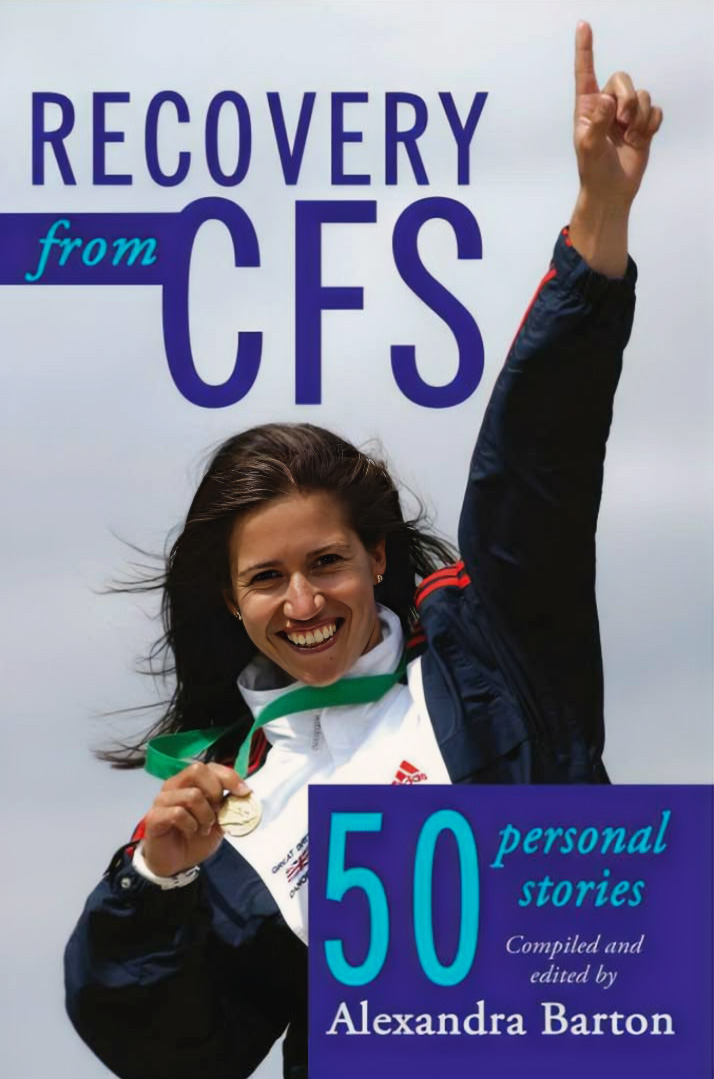
Anna’s experience of Chronic Fatigue Syndrome
Have you ever woken up when you don’t feel ready to start the day? Have you ever felt that you haven’t had enough sleep? The energy is there but you just don’t feel like activating it? (Monday mornings?) Well, what if it was worse than not feeling like getting up? What if you simply couldn’t? The energy that you needed to roll off the bed, get your feet onto the floor and sit up, simply wasn’t there? Your body is effectively on strike.
In April 2003, I was diagnosed with Chronic Fatigue Syndrome (CFS), an illness the medical profession argues about in diagnosis, making it extraordinarily difficult to treat. The effects, however, are palpable. It is a serious condition that a couple of days in bed won’t cure. If you break your leg, you’re back training in 6 to 8 weeks. CFS kept me out of my sport for two whole years.
I wasn’t bad enough to lie in bed all day, but I didn’t feel well enough to be out in normal everyday life. It was like being locked in a halfway world—not fully in the ‘sick’ world, but not fully in the ‘well’ world either.
To be successful as an athlete, you need to be vigilant—constantly checking that you are doing everything possible to achieve your goal. You also tend to be very in tune with your body. Although I thought I was listening, I was actually ignoring bright flashing lights. Alarm bells were going off all over the place, and my body was crying out for changes. Because I didn’t listen, my body spoke louder through its symptoms.
The symptoms vary from person to person but for me included feeling permanently exhausted. I went from racing two-and-a-half-hour marathons in a kayak to not being able to do 20 minutes of light paddling—the equivalent of a brisk walk. My muscles ached in constant pain; I went from rattling off 100 press-ups to being unable to hold my hands up in the shower to wash my hair. I alternated between sleeping 14 hours a night and suffering severe insomnia.
And those were just some of the physical symptoms; the emotional battle was just as brutal. Not only was I unable to do the sport I loved and had to watch my team mates head off to the World Championships and Olympic Games without me, doctors struggled to accurately diagnose me. Initially, they assumed I had just over-trained. But training 14 to 18 hours a week causes normal tiredness; this felt far more profound.
After six frustrating months and multiple misdiagnoses, I was finally diagnosed with CFS in September 2003. The sheer mystery surrounding the condition made it even harder to navigate. How do you explain intangible pain and fatigue? Without a visible cast or symptoms, people couldn’t comprehend what I was going through. Sometimes, I wished my skin was see-through just so they could see my pain.
The lowest point arrived when a doctor told me the words no athlete ever wants to hear: “There is no cure or treatment. You just have to rest, wait, and manage the symptoms.” One doctor told me I would never race again.
I was scared, what if they were right, what if I never got better? What would I do? For a while I wallowed in misery and self pity – feeling sorry for myself, asking why me and why now?
Eventually I realised that feeling like a victim wasn’t going to cure me, I needed to be proactive, control what I could control – focus on finding solutions rather than fixating on problems, surrounding myself with supportive people, who believed in me and the possibility of recovery.
I believed that there had to be a way out and I believed that I would recover and return to training and racing again. I had hope and that was essential. Without hope, we have nothing. Hope isn’t wishful thinking – it’s a deeply held belief that positive outcomes are possible.
The turning point came in September 2004 when my sponsor’s employee introduced me to Reverse Therapy, a holistic mind-body approach developed by Dr John Eaton. A proven medical principal, and at the time, a relatively new way of addressing conditions such as CFS, Fibromyalgia and ME. The treatment helps individuals identify and resolve the root causes of the symptoms by reconnecting the mind and body.
It works on the principle that physical symptoms stem from an overactive threat system in the brain. By learning to decode physical warning signs and address their root triggers, the nervous system registers safety and down-regulates, allowing the body to recover.
Once I embraced the process, everything changed, my symptoms rapidly improved and by January 2005, I started gentle 15-minute runs and light kayaking; by May, I was back to full capacity, training nine to ten times a week. I went from strength to strength but rebuilding my physical health was only half the battle, I also had to overcome the anxiety and self-doubt of racing again after two years out. But supported by my family, my sports psychologist Peter Terry, and my coach Roland Lawler, my confidence and mental strength gradually grew and that year I went on to regain my World and European Championships titles.
It was an unbelievable comeback – one that wouldn’t have happened without Reverse Therapy and the incredible support of my family, friends, and sponsors.
Some resources that I highly recommend include:
Treatments and Support:
The Chrysalis Effect – a holistic and fully supported approach to recovery from ME, CFS and Fibromyalgia
The Curable App – is a clinically backed mobile app designed to help users manage and reduce chronic pain by addressing its brain-based and biopsychosocial causes
Books:
‘M.E, Chronic Fatigue Syndrome, Fibromyalgia – The Reverse Therapy Approach. By John Eaton.
Unlearn your Pain – The Science of Recovering from Fatigue, Chronic Pain, Anxiety and Depression, By Howard Schubiner
Healing Back Pain – The Mind-Body Connection by John Sarno
When the Body Says No – The Cost of Hidden Stress, by Gabor Mate
The Way Out – Heal Chronic Pain, by Alan Gordon